
If your skin has started losing that bounce-back firmness it used to have, there’s a good chance the answer isn’t another retinol — it’s a peptide. These tiny amino acid chains are quietly becoming the most trusted “quiet luxury” ingredient in skincare, and once you understand what they actually do, you’ll never look at a serum label the same way again.
Peptides aren’t hype. They’re one of the few skincare ingredients with real biological logic behind them: they don’t just sit on your skin, they talk to it — sending signals that tell your cells to produce more collagen, calm inflammation, and repair damage. And unlike some trendy actives, most peptides are gentle enough for sensitive skin, making them one of the few “does everything” ingredients that won’t leave your face red and irritated.
In this guide, we’re breaking down over 14 of the most effective peptides in skincare today, what each one actually does, and how to build a peptide routine that works with your skin instead of overwhelming it.
What Are Peptides, Exactly?
Peptides are short chains of amino acids — the same building blocks your body uses to construct proteins like collagen, elastin, and keratin. Think of amino acids as individual letters, and peptides as short words made from those letters. String enough of those “words” together and you get a full protein.
Peptides act as messengers that signal skin cells to produce these structural proteins, which keeps skin firm, supple, and elastic. The catch is that your body’s natural peptide production slows down with age, sun exposure, and stress — which is exactly why applying peptides topically has become such a popular way to fill in the gap. ZO Skin Health
Here’s the part worth pinning: Peptides don’t just moisturize your skin — they instruct it to rebuild itself from the inside out.
One reason peptides have become such a skincare staple is size. Full proteins are too large to absorb through skin, but peptides are small enough to actually penetrate and get to work. That’s the whole reason cosmetic chemists break proteins down into peptide form in the first place — it’s the only way to get any real benefit topically. Cetaphil
[Image placement suggestion: vertical infographic — “What Is a Peptide?” with a simple amino acid → peptide → protein diagram]
How Peptides Work on Skin
Peptides don’t work like exfoliating acids or vitamin C, which change your skin’s surface chemistry directly. Instead, they act more like tiny instructions sent to your skin cells. Depending on the sequence of amino acids, a peptide can tell your skin to:
- Produce more collagen and elastin
- Slow down the enzymes that break collagen apart
- Relax the tiny facial muscles responsible for expression lines
- Deliver trace minerals (like copper) that support tissue repair
- Calm inflammation and support the skin barrier
This is why peptides are sorted into different “job categories” — and why the peptide that’s right for crow’s feet is completely different from the one that’s right for sagging or dullness.
The 4 Main Types of Skincare Peptides
Before jumping into individual ingredients, it helps to understand the four broad categories peptides fall into. Most “14+ peptide” lists blend these together, but knowing the category tells you what a peptide is actually for.
1. Signal Peptides
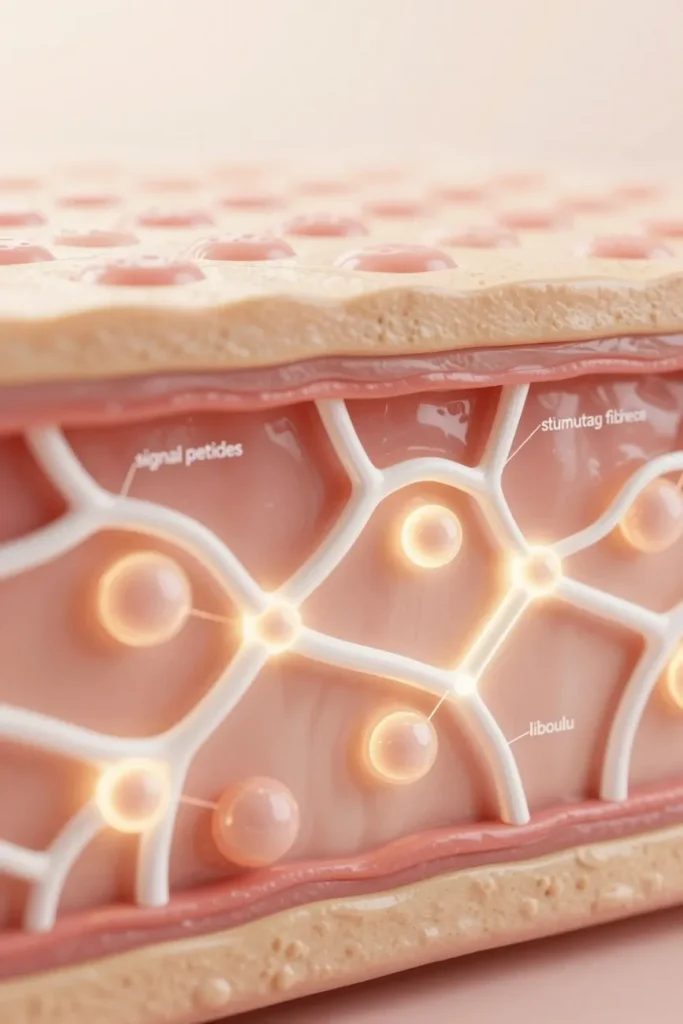
These directly stimulate collagen, elastin, and hyaluronic acid production. They’re the peptides most associated with firmness and wrinkle reduction.
2. Carrier Peptides
These transport trace minerals — most commonly copper — deep into the skin to support enzymatic repair processes and wound healing.
3. Neurotransmitter-Inhibiting Peptides (Neuropeptides)
Often nicknamed “topical Botox,” these relax the micro-contractions in facial muscles responsible for expression lines, without needles.
4. Enzyme-Inhibitor Peptides
These slow down the enzymes (like collagenase) that break down collagen you already have, essentially protecting the collagen you’ve built.
Save-worthy takeaway: A great peptide serum usually blends peptides from at least two of these categories — because building collagen and protecting it are two different jobs.
[Image placement suggestion: pinnable 4-quadrant graphic labeling each peptide type with an icon]
14+ Peptides in Skincare and What Each One Does
Here’s the list you came for — broken down by what each peptide actually brings to your routine.
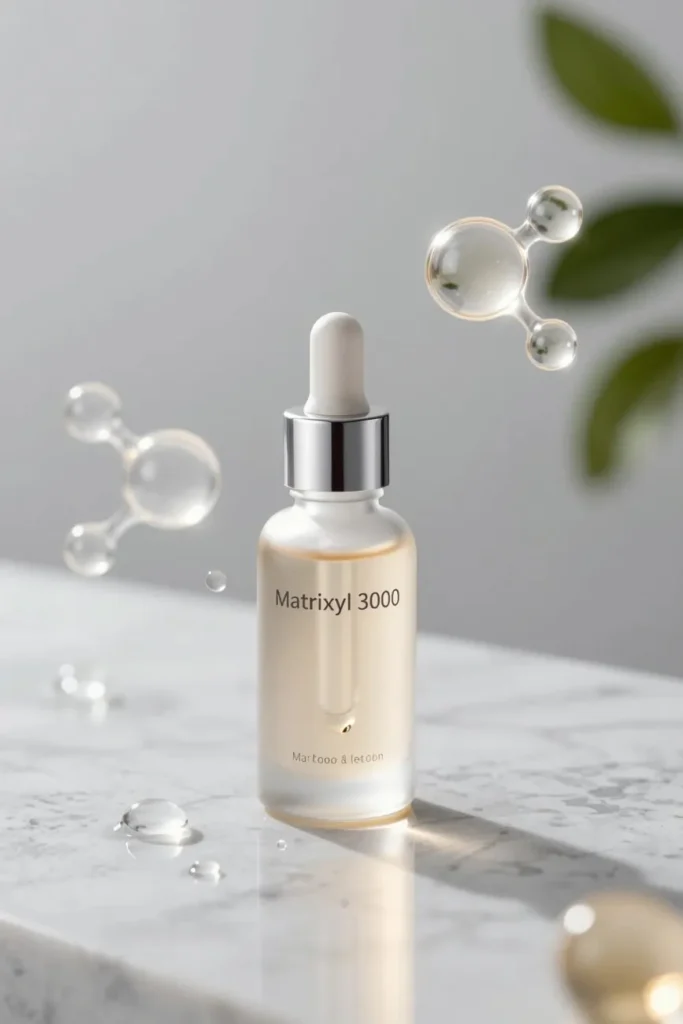
1. Matrixyl 3000 (Palmitoyl Tripeptide-1 + Palmitoyl Tetrapeptide-7)
One of the most studied signal peptide blends on the market. It mimics fragments of broken-down collagen, which prompts skin to produce fresh collagen in response, and has performed well in placebo-controlled trials for reducing wrinkle depth and volume. This is the peptide most “anti-aging” serums are quietly built around. Maelove Skincare
2. Matrixyl Synthe’6 (Palmitoyl Tripeptide-38)
A newer, more advanced version of Matrixyl. It’s designed to stimulate multiple components of the skin’s structural matrix at once rather than collagen alone. Great for skin that needs support on several fronts — firmness, elasticity, and hydration together. Klow Peptide
3. GHK-Cu (Copper Tripeptide-1)
The gold standard of carrier peptides. It’s a naturally occurring copper-binding peptide found in the body, though levels decline with age, and it’s known for anti-inflammatory and antioxidant activity. GHK-Cu is often the go-to peptide for skin that needs repair, not just prevention — think post-procedure recovery, redness, or compromised barrier function. Maelove Skincare
4. Argireline (Acetyl Hexapeptide-8)
The most famous neuropeptide in skincare. It’s nicknamed “topical Botox” because it blocks the release of a neurotransmitter at the muscle junction, which progressively softens the look of expression lines like forehead creases and crow’s feet. Klow Peptide
5. SNAP-8 (Acetyl Octapeptide-3)
Think of this as Argireline’s stronger sibling. It works through the same muscle-relaxing mechanism but uses a longer peptide chain, making it a common upgrade in serums targeting dynamic wrinkles. Vitali Skincare
6. Leuphasyl (Pentapeptide-18)
This peptide is often paired with Argireline because the two work synergistically to enhance the wrinkle-softening effect. On its own, it’s gentler — a good option if you want the benefit without stacking too many neuropeptides at once. Klow Peptide
7. Syn-Ake
Formulated to mimic the effect of a paralytic compound found in snake venom (minus the venom), Syn-Ake is another neurotransmitter-style peptide often blended into multi-peptide serums aimed at expression lines.
8. Palmitoyl Pentapeptide-4
A classic signal peptide that communicates with skin cells to boost collagen, elastin, and hyaluronic acid production — supporting overall firmness and elasticity over time.
9. Palmitoyl Tripeptide-5
A collagen-stimulating peptide frequently found in eye creams and firming serums, often layered with other signal peptides for a compounding effect on skin texture.
10. AHK-Cu (Copper Peptide Variant)
A close relative of GHK-Cu that also binds and delivers copper to skin cells, supporting the same repair and antioxidant pathways with a slightly different amino acid sequence.
11. Trylagen
An enzyme-inhibitor style peptide complex designed to protect existing collagen by interfering with the enzymes that break it down, rather than only stimulating new collagen production.
12. Hydrolyzed Collagen (Collagen Peptides)
Smaller collagen fragments applied topically to support surface hydration and smoothness. They won’t rebuild deep collagen structure the way signal peptides do, but they’re excellent at improving the skin’s surface feel and plumpness.
13. Palmitoyl Oligopeptide
Often found alongside Palmitoyl Tetrapeptide-7 in anti-aging complexes, this peptide supports the skin’s natural repair processes and is commonly used in formulations targeting deeper wrinkles.
14. Acetyl Tetrapeptide-5 (Eyeseryl)
The peptide most eye creams are quietly built around. It’s specifically studied for reducing under-eye puffiness by supporting lymphatic drainage in the thin skin around the eyes.
Read More : 14+ Whiteheads Treatment Tips That Actually Clear Clogged Pores (For Good)
15. Dipeptide-2
A supporting peptide frequently blended into copper-peptide formulas to enhance overall skin-conditioning benefits alongside the primary actives.
Pin this: You don’t need all 15 peptides in one routine. Pick one from each category — one signal, one carrier, one neuropeptide — and you’ve covered every major aging mechanism.
[Image placement suggestion: vertical “peptide cheat sheet” graphic listing all 15 peptides with a one-line benefit tag next to each]
How to Build a Peptide Skincare Routine
Peptides are refreshingly low-maintenance compared to acids or retinoids. Here’s how to slot them in without overcomplicating your routine:
- Cleanse with a gentle, non-stripping cleanser.
- Tone if you use one — skip anything with a very low pH right before peptides.
- Apply your peptide serum to clean, slightly damp skin.
- Follow with moisturizer to lock everything in.
- Finish with SPF in the morning — peptides don’t protect against UV damage, so sunscreen still carries that job.
Apply peptide serums after cleansing and toning but before heavier creams and oils for the best absorption. Glimmer Goddess
Can You Mix Peptides With Other Actives?
Most topical peptides are compatible with each other, and combining signal peptides with carrier peptides and neuropeptides in one formula is the logic behind well-formulated multi-peptide serums. The one thing to watch is pH — layering peptides with strong acids or raw vitamin C in the same step can reduce their effectiveness, so it’s smarter to alternate them into different parts of your routine or use them at different times of day. Vital Signs TodayGlimmer Goddess
A simple rule of thumb: acids in the morning or on alternating nights, peptides in the routine that doesn’t include your strongest exfoliant.
Do Peptides Actually Work? What Dermatologists Say
It’s worth being honest here instead of oversold. There is legitimate research suggesting some peptides may support collagen production, wound healing, hydration, and skin repair — but peptides don’t reliably penetrate skin in every formulation, and they don’t replace retinoids for collagen stimulation, since the evidence behind retinoids is still stronger and more consistent. Doctorrogers
In other words: peptides are a genuinely useful layer of a routine, not a replacement for the fundamentals. Before reaching for peptides, it’s worth making sure the basics — sunscreen, gentle cleansing, and consistent moisturizing — are already in place, since peptides work best as an addition to that foundation rather than a stand-in for it. Doctorrogers
Another honest note: most brands don’t disclose peptide concentrations, so a product can prominently market a peptide while only containing a small amount of it. Look for brands that are transparent about percentages when possible. Doctorrogers
[Image placement suggestion: simple “myth vs fact” pinnable graphic — e.g., “Myth: Peptides replace retinol / Fact: They work best alongside it”]
Are Peptides Safe for Sensitive Skin?
Yes — this is actually one of peptides’ biggest advantages. Peptides generally have a much better tolerance profile than most prescription-strength actives, and signal and carrier peptides like Matrixyl and GHK-Cu have excellent safety profiles since they’re derived from or mimic naturally occurring compounds. Neuropeptides like Argireline are also well tolerated topically, with no systemic absorption at the concentrations used in skincare. PeptideDeckPeptideDeck
The one caveat: high-concentration copper peptides can occasionally cause temporary changes in skin color due to copper ion activity, so it’s worth patch-testing anything copper-based before applying it to your whole face. PeptideDeck
Frequently Asked Questions
What do peptides actually do for skin?
They act as messengers that tell your skin cells to produce more collagen and elastin, while some varieties also relax expression lines or deliver reparative minerals like copper — depending on which peptide type you’re using.
How long does it take to see results from peptides?
Most people notice a difference in texture and firmness within 4 to 8 weeks of consistent use, since peptides work gradually by encouraging your skin’s own repair processes rather than delivering an instant effect.
Can I use peptides every day?
Yes. Peptides are gentle enough for daily use, morning and night, and don’t carry the purging or sensitivity risk associated with retinoids or exfoliating acids.
What’s the difference between peptides and retinol?
Retinoids have stronger, more consistent evidence behind their ability to stimulate collagen, while peptides work through a gentler signaling mechanism — many people use both together rather than choosing one over the other. Doctorrogers
Which peptide is best for wrinkles?
Signal peptides like Matrixyl are typically favored for structural firmness, copper peptides like GHK-Cu for overall skin quality and repair, and neuropeptides like Argireline for expression lines specifically — so the “best” peptide really depends on which type of wrinkle you’re targeting. PeptideDeck
Final Thoughts
Peptides have earned their spot as a skincare staple — not because they’re trendy, but because the science behind how they work actually makes sense. Whether you’re chasing firmer skin, softer expression lines, or better overall repair, there’s a peptide (or a combination of a few) built for exactly that job.

